Pricing Design Work — Four Methods and What Each One Costs You
Fixed fee, price per square metre, percentage of construction cost, hourly rate. Each one pushes the risk somewhere else. How to choose, and what to put around the number so it holds for the whole project.

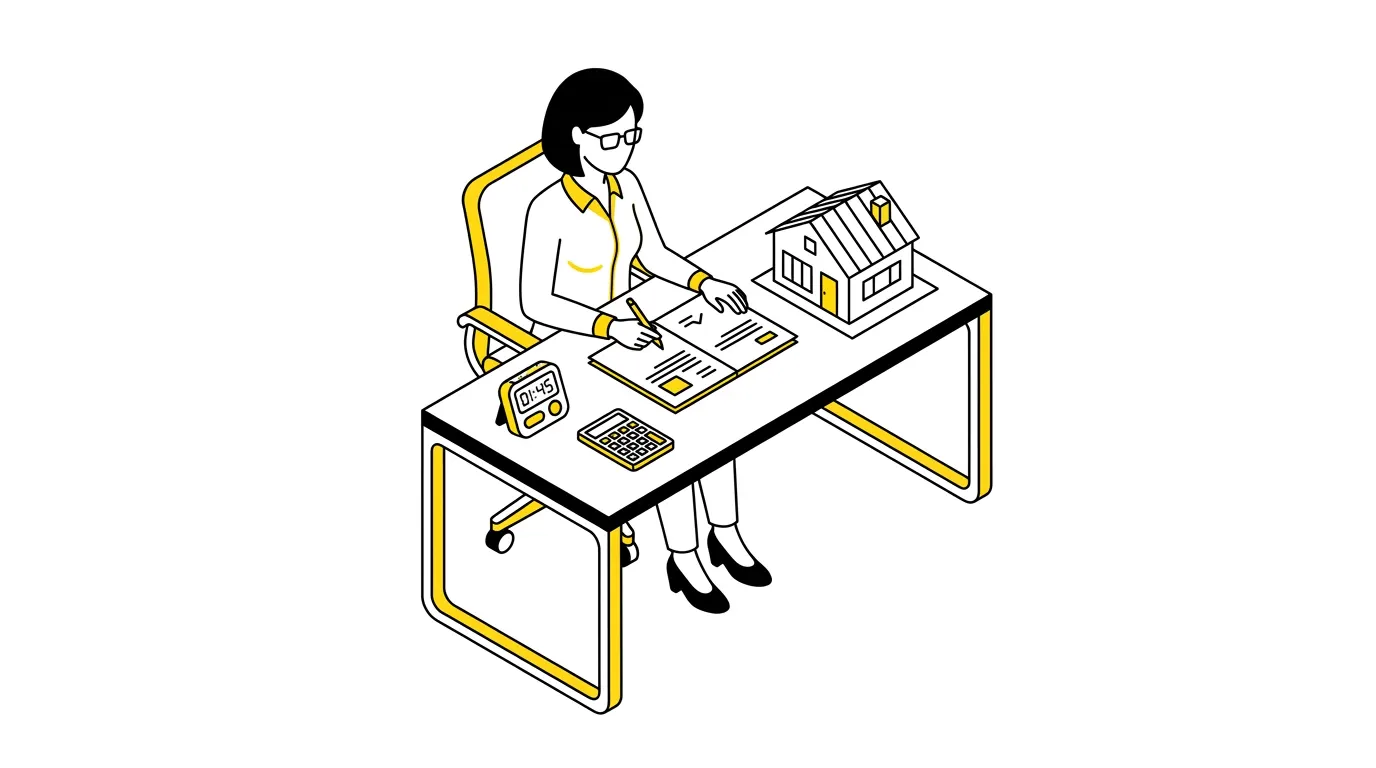
The common mistake in pricing is not charging too little. It is charging for something other than the work you then do. A house with two rounds of revisions and the same house for a client who sends a new Pinterest idea every week are two different services at one price, unless the contract says where the first one ends.
In short
- The price follows the scope and the number of decisions to be agreed, not the floor area. Area is a convenient shortcut that misleads on anything unusual.
- Each of the four methods pushes risk somewhere else: a fixed fee onto you, hourly onto the client.
- A price is defended by contract clauses, not by insistence: revision rounds, scope change as an amendment, payment by stage.
- Price formalities and site supervision separately. Folded into the design fee they disappear and become unpaid work.
What actually drives the price
Square metres are the client’s first question and the weakest measure of the work. A 150 m² house on a flat plot with no planning constraints is half the job of the same house on a slope, next to a listed building, with access from a provincial road.
Five things drive the effort, and only the last one relates to area:
- How many people decide on the client’s side. One person decides in a week, a couple in three, a couple with parents financing the build in a month and a half.
- How difficult the plot is: levels, ground conditions, access, neighbours, what the local plan says or the fact that there is none.
- How much of the paperwork you take on, from the design alone to running the case through to the decision.
- How many consultant disciplines are involved and whether they are your people or the client’s.
- Floor area and how repetitive the layout is.
So the quote starts with a conversation about scope, not with a price list. “How much does a house design cost” without those five answers is the question “how much does a car cost”.
Four ways to count
| Method | Works when | Where it breaks |
|---|---|---|
| Fixed fee for a scope | Typical jobs you know by heart | Every scope change eats the margin unless there is an amendment |
| Price per square metre | Quick quotes for single-family houses | An unusual plot or layout ruins the proportion |
| Percentage of construction cost | Larger buildings where the scope is hard to predict | The client sees a conflict of interest in expensive solutions |
| Hourly rate | Consultations, changes, work of unknown scope | Needs trust and honest time reporting |
In practice most offices combine two: a fixed fee for a clearly described base scope plus an hourly rate for everything outside it. That combination produces the fewest unpleasant conversations, because every extra request has a ready answer — it is inside the scope, or it is billed separately.

Whichever you use, count once how many hours your last finished project actually took. Not an estimate — from the calendar and the emails. Most architects doing this for the first time discover their hourly rate is below that of the contractor building their walls.
What to price separately
Three things routinely end up inside the design fee although they are separate work.
Formalities. Power of attorney, the application, attachments, replies to requests for additional information, trips to the office. That is several to a dozen hours per project, and the one item a client understands immediately, because they know they could not handle it themselves. Priced separately it is a service; folded into the fee it is unpaid work.
Site supervision. A separate contract or a separate clause with its own rate — more on the billing models in the piece on site supervision in practice.
Changes after a stage is approved. Not small corrections, but going back to a decision that was already closed. This is the most common source of quiet loss, because each such change drags drawings, consultations and sometimes a new version of the application behind it.
The clauses that defend the price
A price is defended by the contract, not by holding your ground. Four clauses that removed most disputes for me:
- A number of revision rounds per stage — usually two at concept, one at building design. Further rounds at the hourly rate.
- A definition of scope change with examples: a different number of storeys, a change of structure, a new brief. A scope change means an amendment, not a conversation about goodwill.
- Payment by stage, tied to acceptance of the stage rather than to a date. A stage accepted is a stage invoiced.
- A deadline for the client to supply materials and what happens when it passes: your deadline moves by the same number of days.
You go through these once, at signing, while both sides are friendly. The alternative is going through them in the middle of a conflict. More on contract structure in the piece on seven clauses that prevent disputes.
Raising prices without losing clients
Offices raise prices too late and too little, because they treat every increase as a negotiation with one particular client. It is easier to change the price list than the price: a new table applies from the first day of the quarter, and quotes already sent stay valid for thirty days.
The second part is the reason you give. “I’m raising prices because everything is more expensive” invites negotiation. “At this price I run the case at the planning office through to the decision and take the replies to any requests on myself” describes what the client is paying for, and sets you apart from an offer that does not include it.
If you have more enquiries than you can handle, raising the price is the only way to sort that out without working nights. If enquiries are scarce, the problem is not the price list but where the work comes from.
Where to start this week
Take your last finished project and work out three numbers: how many hours it really took, how many of those fell outside the contract, and what hourly rate comes out when you divide the fee by the time. Then read your contract against the four clauses above.
In my office those numbers only became available once the stages and the client correspondence stopped being scattered across an inbox. In ArchiFlow every project has stages with their own status and the conversation attached to the project, so when it ends you can see what took longest and how many times you reopened a closed decision.
ArchiFlow gives investors real-time visibility into project progress — through one link from the office, with a login if they want one. Ask your architectural office if they use ArchiFlow.
Learn more →