Five Services Worth Selling Alongside the Project
AI cut the cost of producing things that never made sense below a few thousand złoty. Five products for a practice's offer, with the right moment to sell each one and where your liability starts.

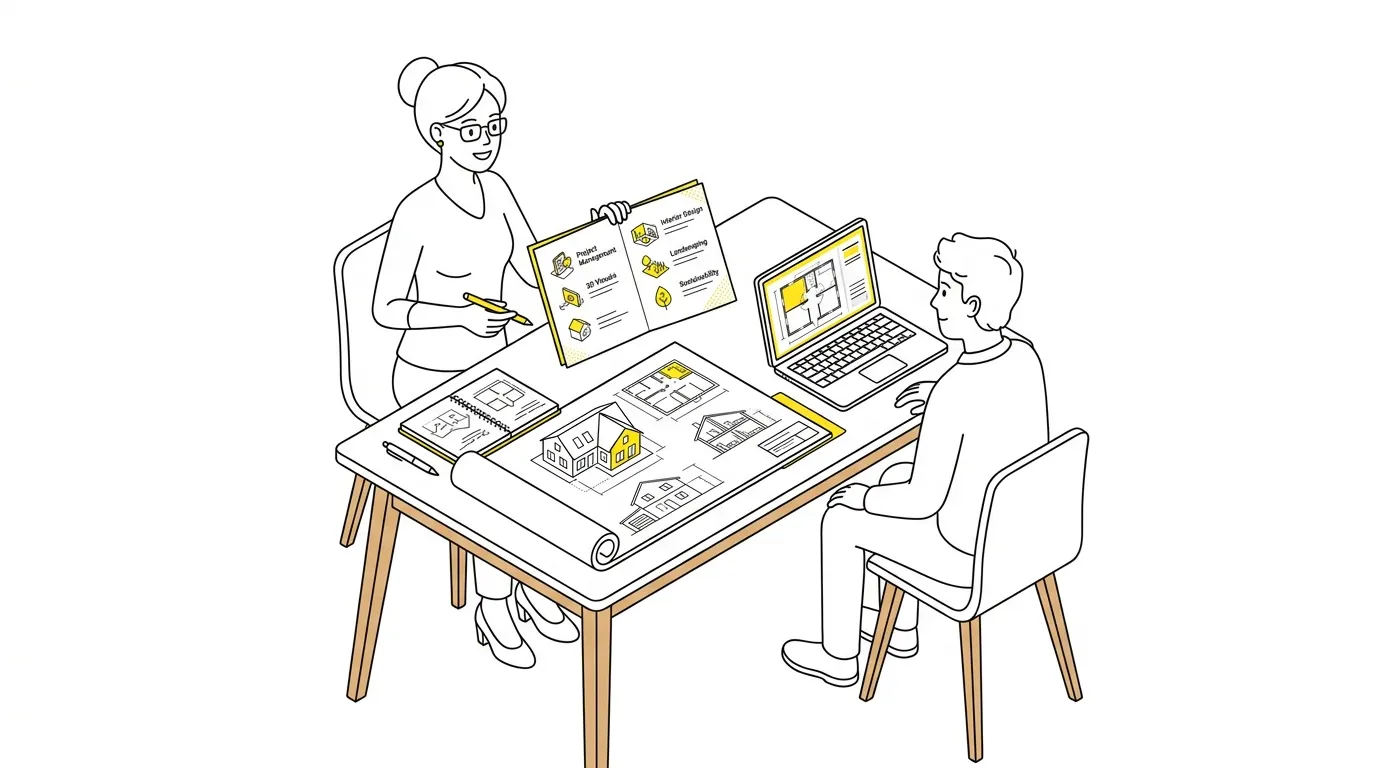
When a client asked whether we could also do the garden, my answer was the same for years: we can, but it’s a separate commission, a few thousand złoty and three weeks. Half of them dropped it right there. Over the past year the production time for some of these things fell far enough that they now fit a new price bracket — the kind a client agrees to during the meeting rather than after a week of thinking. That is a change in the offer, not in the technology.
In short
- Services that made no sense below a few thousand now fit amounts clients decide on in a single conversation.
- Five products that worked for us: plot layout with a garden, a variants package at concept stage, interior direction, a pre-purchase opinion on a plot, and a comparison of heating and ventilation options.
- Conversion depends on when you bring it up, not on the price.
- Production got cheaper, liability did not. You still sign off on every one of these.
Plot layout with a garden
A client who has bought a house design usually has no idea what to do with the rest of the plot. They know where the building goes, and that’s it. The garden question arrives once the shell is up and the budget is gone.
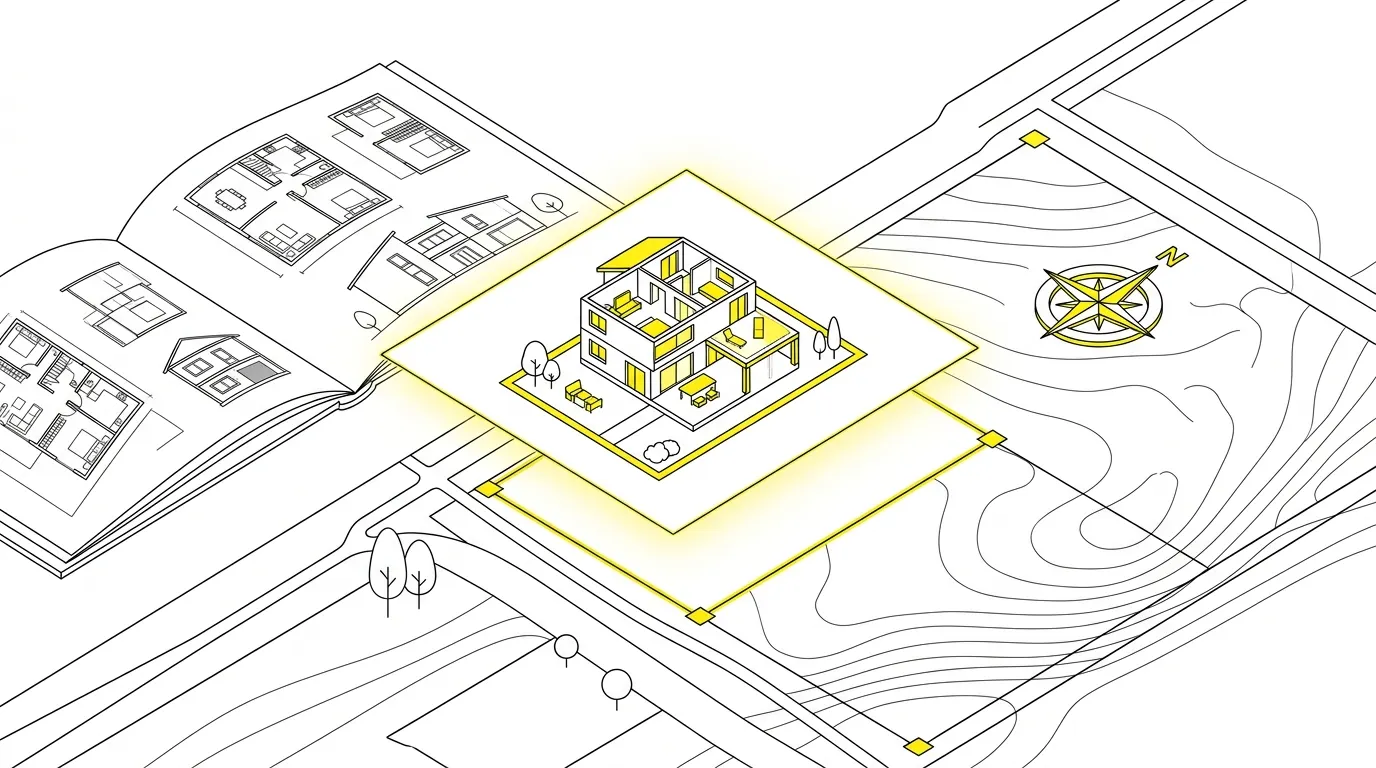
The product looks like this: zones (driveway, entrance, terrace, utility area, recreation), surfaces, planting with species chosen for the conditions, and visualisations of two options. Not construction documentation, just a direction a landscaping contractor can work from.
AI shortens two parts of it: generating mood variants and renders, and a first pass at plant selection that still goes through your review. The rest stays an architect’s work — levels, drainage, access for heavy equipment, planting distances from the boundary and the building. The service is cheap to produce visually and expensive in judgement, which is exactly why it pays.
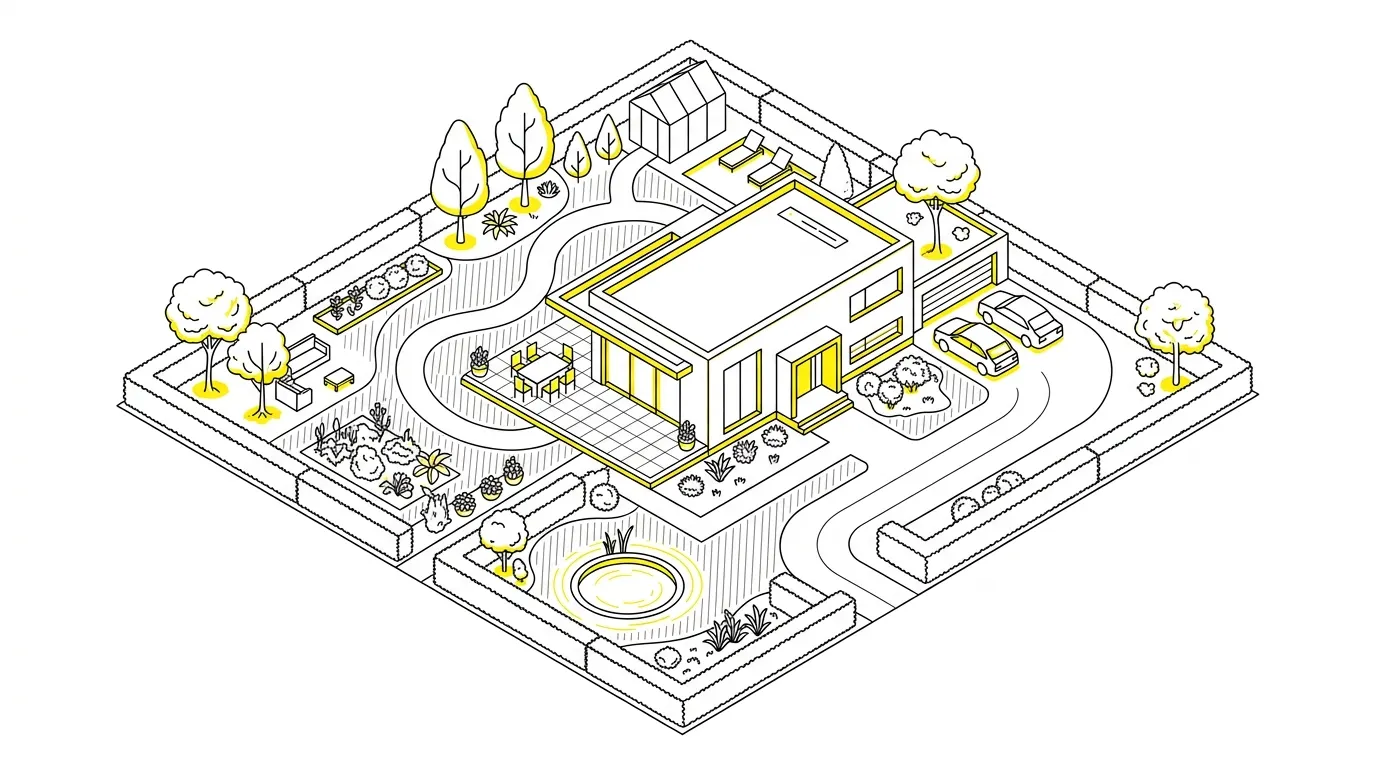
When to raise it: during design adaptation or the building design stage, the first time the client looks at the plot as a whole.
A variants package at concept stage
The classic concept is one layout and one elevation, followed by three rounds of revisions, because the client only discovers what they wanted somewhere in the second version.
We reversed the order. At the concept meeting we show three elevation options or two layouts of the living area, visualised on the same plan. The client picks from something concrete instead of describing it in words, and we close the stage in one meeting rather than three.
Do the arithmetic your own way: if the variants package costs less than two rounds of revisions, it pays for itself on the first commission. For us it cut the concept stage by about two weeks, mostly because the wait for “we’ll think it over at home” disappeared.
When to raise it: in the proposal, as a concept option, not as an add-on afterwards.
Interior direction instead of a full fit-out design
A handful of single-family clients buy a full interior design. The rest furnish the house themselves, usually badly, and come back for advice once the tiles are already down.
Between those extremes sits a product that didn’t use to exist: direction. A material and colour palette, a mood for the main rooms, a list of furniture and fittings with links and price ranges, and a few visualisations showing how it holds together. No working drawings, no details, no supervision.
Producing that set now takes a fraction of the time it did two years ago, because mood variants and visualisations come in hours rather than days. Your work is what remains: deciding which of those variants makes sense with this window layout, and throwing out whatever can’t actually be bought locally.
When to raise it: at handover of the building design, when the client starts thinking about finishes.
A pre-purchase opinion on a plot
This is the only one of the five that reaches a client before they become your client. People view plots without knowing what to look for. They buy a slope with no access, a site with a roof-pitch rule that rules out the house they want, or farmland they’ll have to reclassify, which they find out six months later.
The product: two or three pages. What can be built here and at what scale, what the local plan blocks or what the absence of one implies, which formalities come before design and how long they really take, and what to settle before signing. A one-sentence verdict at the end, because that is what the client is paying for.
AI helps with reading the plan and assembling data from public registers. The opinion is issued and signed by an architect, because that is where the value sits: the client is buying your judgement, not a summary of documents.
When to raise it: outside the design process entirely — on your website and social media. This service builds a pipeline a year ahead, because whoever asks about a plot today is looking for a designer next year.
Comparing heating options and running costs
“Heat pump or gas” comes up in every project and gets answered from memory every time, because costing it honestly used to take half a day. For the client it is a twenty-year decision and one of the more expensive ones on the whole build.
The product: two or three options for heat source and ventilation for this specific house, with upfront cost, estimated annual cost, and what changes with the subsidies currently available. Plus a recommendation with reasoning.
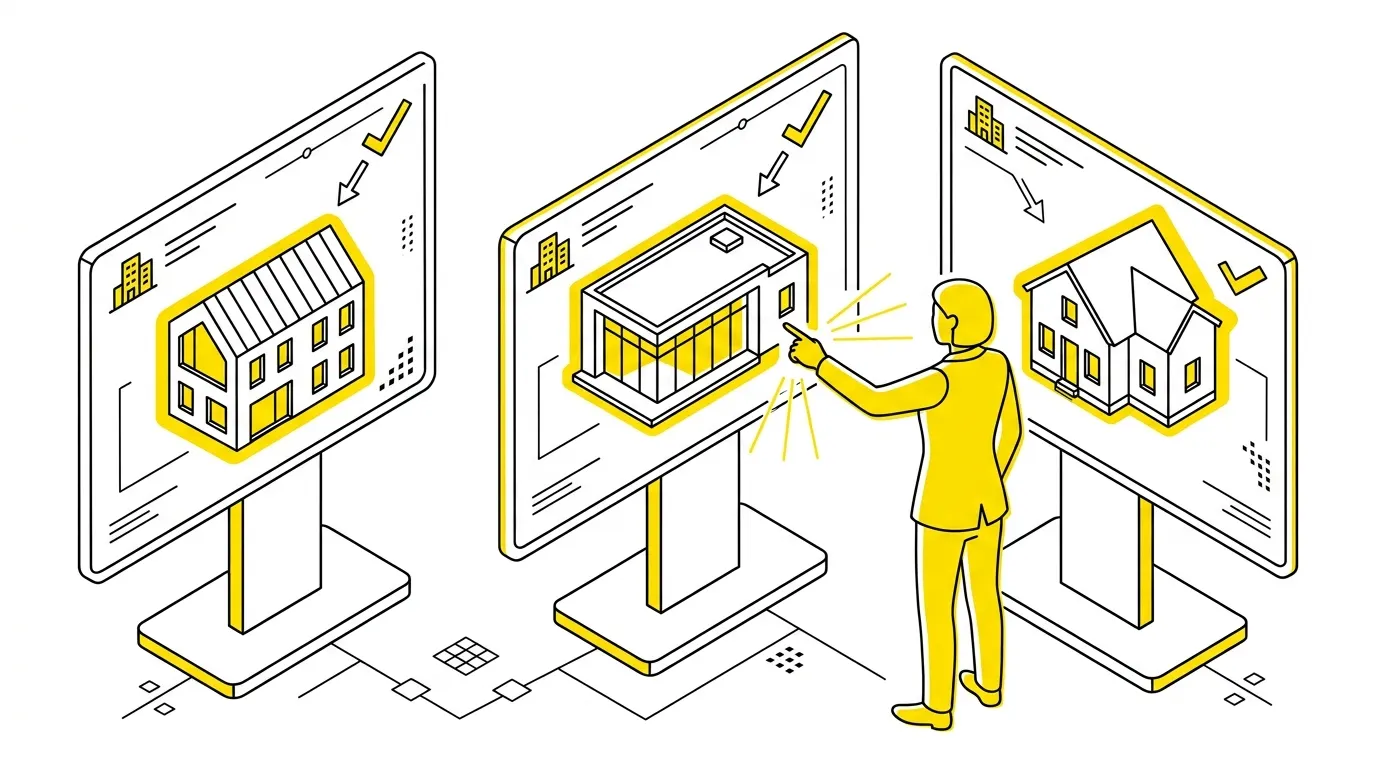
A stronger warning here than elsewhere: a model will happily fit the numbers to what it thinks you expect. Inputs come from the project and from current price lists, and the result gets checked by hand. You are selling a figure on which somebody will spend a hundred thousand złoty.
When to raise it: at building design stage, before the installation is chosen, which is exactly when the client starts googling it anyway.
Putting it into the offer
A few things decided whether a service actually sold for us.
Start with one, not five. An offer with five new items at once reads like an attempt to pad the invoice. One service proposed at the right moment reads like an idea.
Price from the value of the decision, not from hours. A plot opinion saves the client from a purchase they would regret for a decade; the heating comparison saves tens of thousands in running costs. Hours only tell you whether it works for you; the price should follow what the client gets to settle. Time the first delivery and assume the second takes half as long, because by then you have your templates.
Don’t sell it on the strength of AI. Clients don’t care what you produced it with, and mentioning generation lowers the perceived value. Talk about what they receive and what it lets them decide.
And the part technology didn’t change: each of these items carries your signature on the plant selection, the levels, the figure in the cost table. Production got cheaper, liability did not — which is precisely why the client pays you instead of writing the prompt themselves.
With four extra services on one commission it is easy to lose track of what the client ordered and what has been delivered. In our office each one is a separate stage in the project, so the client can see in the portal where their garden and their heating comparison stand without emailing to ask.
ArchiFlow gives investors real-time visibility into project progress — through one link from the office, with a login if they want one. Ask your architectural office if they use ArchiFlow.
Learn more →